
The Illusion of Being "Over"
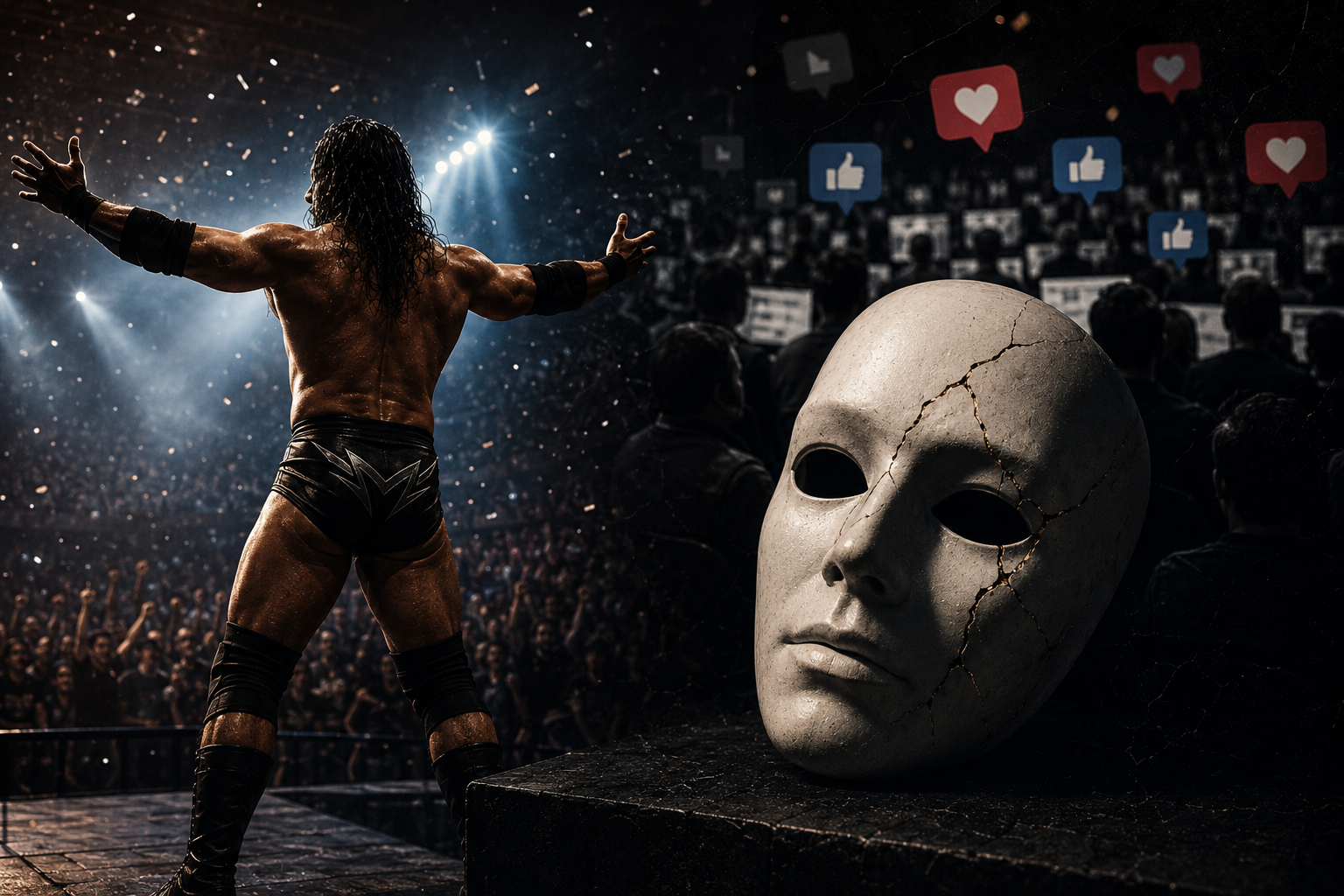
In the first article of this series, we talked about competition.
Or more specifically, the illusion of it.
Then we talked about realism. Then momentum.
All three are concepts that sit at the center of modern fantasy wrestling. They're discussed constantly. They influence how feds are run, how stories are told, and how success is measured.
But there is one term that might get thrown around more than all of them combined.
Over.
Spend enough time in fantasy wrestling and you'll hear it everywhere.
"That character is over."
"She's gotten herself over."
"He's one of the most over people in the fed."
"That gimmick never got over."
It's become one of those terms that everyone uses and very few people stop to define.
And maybe that's because, years ago, it felt easier to identify.
You knew who was over.
You didn't need someone to explain it.
You didn't need rankings, statistics, reactions, polls, Discord emojis, or engagement numbers.
You simply knew.
The audience reacted.
People talked.
People cared.
Whether they loved the character or hated the character almost didn't matter.
The reaction existed.
And that's what made someone over.
Today, I'm not convinced it's that simple anymore.
Because fantasy wrestling has become very good at creating the appearance of popularity while making it increasingly difficult to determine what popularity actually looks like.
When Being Over Was Easier To Spot
One of the biggest differences between fantasy wrestling twenty years ago and fantasy wrestling today has nothing to do with writing quality.
If anything, the average writer is probably better now than they were back then.
Promos are stronger.
Characters are more developed.
Stories are more sophisticated.
Most communities are healthier than the environments many of us remember from the early days.
But one thing has become significantly harder to identify.
Popularity.
Back in the forum era, almost everything happened in public.
The roleplays were public.
The reactions were public.
The discussions were public.
The arguments were definitely public.
If somebody was connecting with the audience, you saw it happen.
Their promos got quoted.
Their angles got discussed.
People referenced their stories.
Handlers wanted to work with them.
You could feel the influence they had on the environment around them.
There was very little mystery involved.
Today, a huge amount of interaction happens in places nobody else can see.
Discord servers.
Private chats.
Group messages.
Voice calls.
Communities that exist entirely outside the fed itself.
The audience is still reacting.
But the reaction is often hidden.
And that creates an interesting problem.
For the first time, many of us are trying to determine who is over while having significantly less visibility into the signals that used to help us measure it.
The Visibility Trap
This is where things start becoming complicated.
Because visibility and popularity are not the same thing.
They never were.
But modern fantasy wrestling increasingly treats them as if they are.
A character appears everywhere.
They're involved in multiple stories.
They're active every week.
They comment on everything.
They're constantly present.
The assumption becomes obvious.
They must be over.
Maybe they are.
Maybe they aren't.
That's the problem.
Familiarity creates the illusion of popularity.
The more often we see something, the more important it begins to feel.
But being recognized and being over are not automatically the same thing.
We've all seen characters who seemed to be involved in everything and somehow never felt essential.
And we've all seen characters disappear for months only to return and instantly become one of the biggest talking points in the fed.
The difference wasn't exposure.
The difference was investment.
People cared what happened next.
That has always been the true measure of being over.
The Friendship Problem Nobody Wants To Discuss
This is probably the most uncomfortable part of the conversation.
Not because anyone is doing anything wrong.
But because modern fantasy wrestling communities are built differently than they used to be.
They're smaller.
Closer.
More supportive.
More connected.
And that's largely a good thing.
I don't think many people would willingly return to some of the toxic environments that existed years ago.
But every positive change creates side effects.
One of those side effects is that it becomes harder to separate three very different things:
- People like me.
- People like my writing.
- People like my character.
Those are not the same thing.
Someone can be incredibly respected within a community and have a character that generates very little actual audience investment.
Someone can be personally popular while their stories struggle to connect.
And someone can create a character that everybody talks about while being one of the most divisive people in the room.
Fantasy wrestling has always had examples of all three.
The challenge today is that our communities are so interconnected that those distinctions often blur together.
Positive feedback becomes proof of popularity.
Popularity becomes proof of being over.
And before long, the definition itself starts getting fuzzy.
Being Over Doesn't Mean Being Liked
This might be the biggest misconception of all.
Being over has never meant being universally liked.
If anything, some of the most over characters fantasy wrestling has ever produced were deeply polarizing.
People argued about them.
People rooted against them.
People wanted to see them fail.
People wanted somebody to shut them up.
But they cared.
That's the important part.
They cared.
Somewhere along the way, fantasy wrestling started treating approval and popularity as the same thing.
They're not.
A character doesn't become over because everybody agrees they're great.
A character becomes over when people become emotionally invested in what happens to them.
Love.
Hate.
Curiosity.
Anticipation.
Frustration.
The specific emotion almost doesn't matter.
The connection does.
The Championship Illusion
For years, fantasy wrestling has treated championships as evidence that someone is over.
Sometimes that's true.
Sometimes it isn't.
A championship doesn't create popularity.
A championship amplifies it.
That's a very important distinction.
The belt is a spotlight.
If people already care, the spotlight makes them care more.
If people don't care, the spotlight simply exposes the problem.
We've all seen title reigns that felt larger than the championship itself.
We've also seen title reigns that somehow felt empty despite all the success attached to them.
The championship wasn't the difference.
The connection was.
The audience investment was.
The character was either over before the title arrived or they weren't.
The Characters We Still Remember
Here's a simple exercise.
Think back to the fantasy wrestling characters you've encountered over the years.
Not necessarily the best writers.
Not necessarily the most decorated champions.
The characters you actually remember.
The ones that still come to mind years later.
Why?
It usually isn't because of their win-loss record.
It usually isn't because of the championships they held.
It usually isn't because they topped a ranking system.
It's because they made you feel something.
They entertained you.
Frustrated you.
Inspired you.
Made you laugh.
Made you angry.
Made you curious.
Whatever it was, they connected.
And that's the thing many people forget.
Being over has always been about connection.
Everything else is secondary.
So How Do We Know Who's Over?
That's the question this entire article circles around.
How do we know?
The truth is, we probably don't know as clearly as we once did.
The signals have changed.
The platforms have changed.
The communities have changed.
But the underlying principle hasn't.
Being over has never been something you could declare for yourself.
It has never been something a title could grant.
It has never been something a graphic could create.
It has always been something the audience decides.
Sometimes consciously.
Sometimes unconsciously.
And often without ever saying it out loud.
You know somebody is over when people pay attention before being told to.
You know somebody is over when people care what happens next.
You know somebody is over when their absence becomes noticeable.
You know somebody is over when the conversation changes the moment they appear.
Those signs still exist.
They're just harder to see than they used to be.
Final Thought
Competition.
Realism.
Momentum.
Being over.
The four biggest illusions in modern fantasy wrestling all share something in common.
None of them are completely fake.
Competition still exists.
Realism still exists.
Momentum still exists.
People still get over.
The illusion comes from how difficult those things have become to define.
And nowhere is that more apparent than in the idea of being over.
Because being over was never something you could assign to yourself.
It was something other people decided.
The challenge today is that the audience has become harder to see, the reactions have become harder to measure, and the signals have become harder to read.
But the principle remains exactly the same as it always was.
When people genuinely care about your character, you'll know.
And when they don't, no amount of visibility, championships, momentum, or praise can completely fake it.
That's why being over remains one of the most valuable things in fantasy wrestling.
And why the illusion of it remains one of the easiest things to mistake for the real thing.


