
Warrior Kingdom Review: Tanaka Wins the Belt, Turtle Steals the Scene
RESULTS: https://hrhgeorgevi.boards.net/thread/1448/tv-special-report-warrior-kingdom
Warrior Kingdom was a tournament-driven special with a very clear identity: traditional heavyweight structure up top, international lightweight credibility in the middle, joshi tag energy underneath, and just enough comedy at the end to remind everyone this is still professional wrestling and not a combat sports museum.
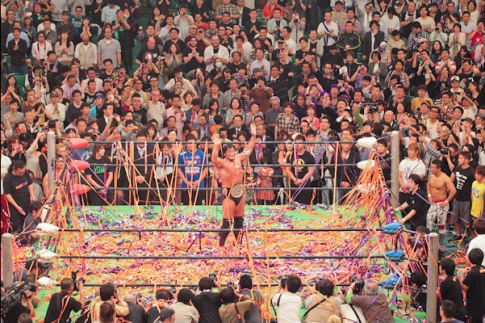
The show belonged to Akira Tanaka. That was obvious by design. He opened the card, survived The Great Ōkami by disqualification, then came back later to defeat Kintora and win the Asia-Pacific Heavyweight Wrestling Grand Prix. That matters because the booking did not simply hand him a belt. It made him go through two very different problems: Ōkami’s volatility and Kintora’s mass. By the end, Tanaka felt like the correct tournament winner because the night had been built around his adaptability.
The opener with Tanaka and Ōkami was a smart first chapter, even with the disqualification finish. Ōkami using red mist protects him as dangerous and unstable, while Tanaka advances without needing to beat him clean before the final. That is functional tournament booking. The risk is that DQ eliminator finishes can feel cheap, but here it worked because Ōkami’s mist was character, not convenience.
Kintora beating Kurutta Uma was more direct and probably needed to be. Uma trying to run early gave Kintora the right presentation: the big man who does not chase games forever, just drags the problem back and crushes it. The Uranage finish was strong, clean, and simple. That is exactly what Kintora needed before the final.
The lightweight tag was the best wrestling match on the show from a pacing standpoint. Kiminobu Kuroki and Park To beating El Hijo del Metallica Panther III and Rhys Pendragon had the kind of international showcase structure that makes a “Best In The World” label feel earned rather than decorative. Panther III was the standout because his counters gave the match life. Kuroki brought champion polish, Park To brought the eventual submission threat, and Pendragon gave the European side enough credibility that the finish felt competitive instead of ceremonial.
The Siberian Tiger finish was the right call because it gave Park To a defining moment while still keeping Kuroki central as Worlds Lightweight Champion. That is useful booking. You do not want the champion’s partner to feel like a passenger in a showcase match. Park To winning with the Romero Special gives the team a sharper identity and gives future lightweight booking more options.
The Wonder Girls beating C.A.G.E. was another strong structural piece. Danielle Brosnan and Shauna Moore got enough offense to feel like credible international opposition, but the Wonder Girls winning in Tokyo was the correct crowd and brand decision. Wonder Nishihara hitting the Starlight Spiral after weathering Brosnan’s charge gave the finish a strong home-team payoff without making C.A.G.E. look overmatched.
The main event between Tanaka and Kintora worked because it was not just a repeat of Kintora’s earlier formula. Tanaka had to chop him down with technique, timing, and attrition. Kintora’s powerslams and shoulder thrusts made him feel like a wall, but Tanaka’s arm work, knees, Jumping DDTs, and final use of Kintora’s own Uranage created a smart finishing arc. Beating the sumo star with his own weapon was not subtle, but it was effective. Sometimes obvious symbolism is obvious because it works.
Then Arthur T. Turtle happened, and that final post-match scene was fascinating because it almost undercut the grandeur on purpose. The Commonwealth Heavyweight Champion entering after Tanaka’s major tournament win should have been a tense champion-versus-champion confrontation. Instead, Turtle tripped, crashed into Kintora, got shoved into Tanaka, annoyed everyone, and bailed. That is a choice. It either frames Turtle as a ridiculous champion who somehow remains dangerous, or it risks making the title scene feel like a gag after a serious tournament final. The next appearance will decide which one it is.
Three Things I Really Liked
1. Akira Tanaka’s tournament path had shape.
He did not win two identical matches. Ōkami gave him chaos. Kintora gave him size. Tanaka had to survive one and solve the other. That made the belt win feel earned.
2. The lightweight tag delivered the show’s best competitive texture.
Kuroki, Park To, Panther III, and Pendragon all had clear roles. The match felt international, fast, and credible. Park To getting the submission was a strong way to elevate him without weakening Kuroki.
3. Kintora was protected even in defeat.
He beat Uma decisively, then pushed Tanaka deep into the final. Losing to his own Uranage gives Tanaka a big moment, but Kintora still leaves looking like a serious heavyweight problem.
Three Things I Disliked or Found Confusing
1. The Arthur T. Turtle post-match may have gone too comedic for the moment.
There is value in a weird champion, but Tanaka had just won a major belt. The follow-up needed to enhance that achievement. Turtle stumbling through the confrontation was memorable, but it also risked making the new champion’s moment feel secondary.
2. Ōkami’s disqualification worked, but the tournament needed clearer fallout.
The red mist finish protected him, but what does it cost him beyond elimination? If Ōkami just disappears, the finish becomes a device. If he remains a dangerous unresolved problem for Tanaka, it becomes useful.
3. Kurutta Uma felt like a stepping stone more than a tournament threat.
His evasive tactics fit the character, but Kintora dominated the emotional read of the match. Uma needs a stronger hook if he is going to matter outside of being the guy who gets crushed by the bigger monster.
Final Thoughts
Warrior Kingdom was a good tournament special because it understood what it needed to accomplish. It crowned Akira Tanaka, protected Kintora, showcased the lightweight division, gave the Wonder Girls a strong home win, and placed Arthur T. Turtle in Tanaka’s orbit for whatever strange champion-versus-champion direction comes next.
The best part of the show was its clarity. The matches were not overstuffed. The tournament had a beginning, middle, and end. The international tags gave the card variety without distracting from the Grand Prix. That is disciplined event construction.
The only real question is tone. If Turtle’s post-match stumble is meant to set up a champion whose incompetence hides real danger, that can work. If it is just comedy after a serious belt win, that becomes a problem. Tanaka came out of Warrior Kingdom looking like the right man to carry the Asia-Pacific belt. The promotion now has to make sure the world around him treats that belt like it matters.
By: Collin Voss
Collin Voss covers weekly fantasy wrestling programming with a focus on character progression, match psychology, and overall show structure.


