
sVo Jackpot 2026: The House Wins Ugly
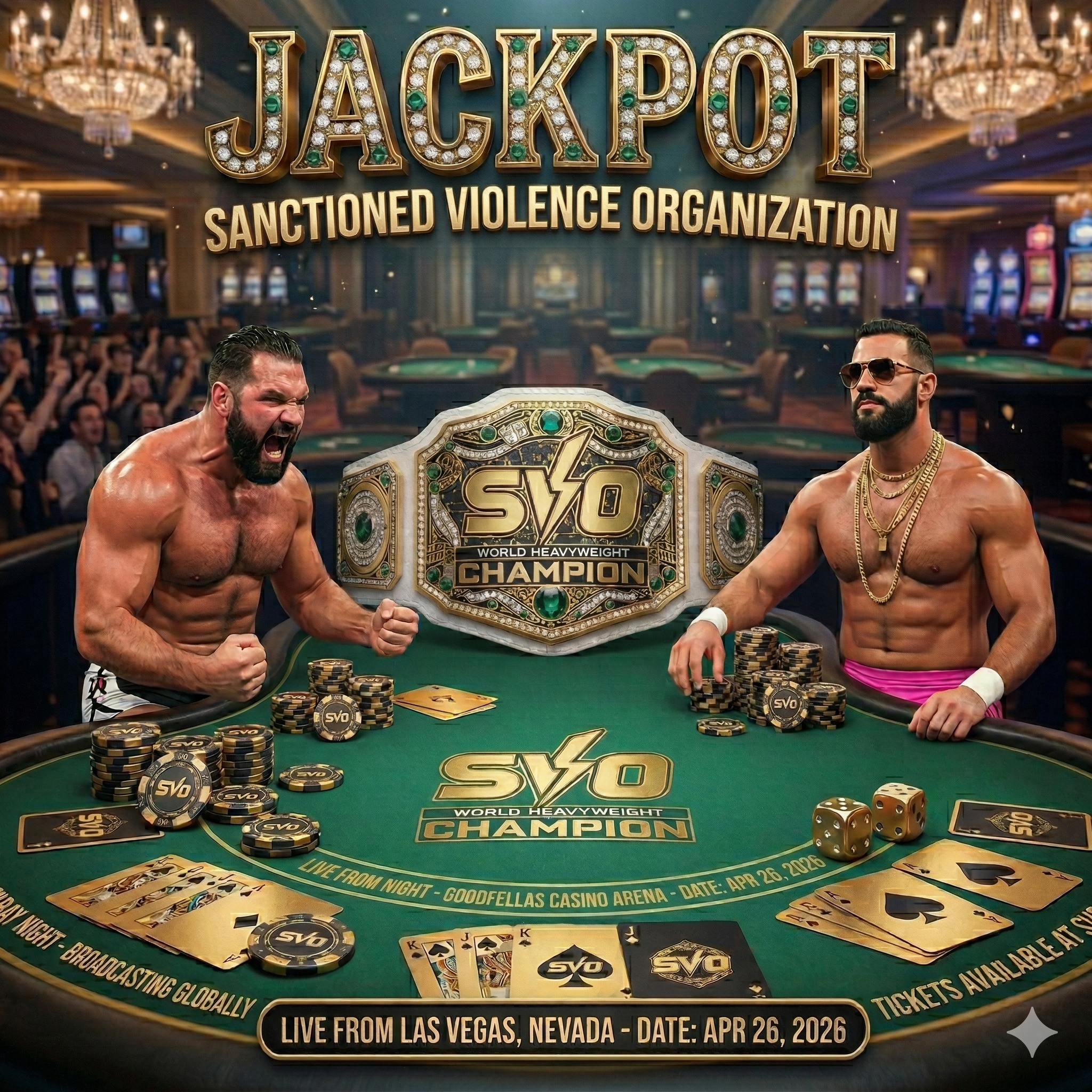
RESULTS: https://sanctionedviolence.com/events/svoevent/svo-jackpot-2026-ppv/
sVo Jackpot 2026 was a show built around consequence, and that matters because sVo has often been at its best when the roster feels like a series of overlapping problems instead of isolated match graphics. This was not a clean babyface triumph show. It was not designed to send the crowd home glowing. It was a casino-floor knife fight where almost every major result created a debt somebody else is going to collect later.
That is the correct identity for this promotion. sVo works when Las Vegas is not just the setting, but the operating system. People gamble with momentum. People cheat when the referee is out of position. People interfere because self-interest beats sportsmanship every time. Jackpot leaned into that worldview heavily, and while not every piece landed with equal force, the show had a clear spine: Adam Garcia rises, Danny Domino steals the throne, and everyone underneath them keeps making the title ecosystem more unstable.
The Jackpot Rumble was the most important match structurally, because it gave Adam Garcia a clean directional launch without needing to overcomplicate the path. Garcia winning while already holding the International Heavyweight Championship immediately reframes him from “protected champion” to “incoming collector,” and that is a smart piece of positioning. The promo afterward did the real work. Calling himself a collector gives the audience the hook. He is not just chasing the sVo Heavyweight Championship because that is what winners do. He wants to consolidate power. That is a stronger motivation than generic ambition.
The Rumble itself had enough motion to feel chaotic, but it did suffer from the usual battle royal problem: a lot of names moved through the match without individual texture. Masafumi Satake stood out because the finish positioned him as a credible final obstacle, and Emily Shaw making the final four gave the match a little more shape than “big men trade eliminations until the chosen winner remains.” Still, the middle stretch needed one or two more character-specific eliminations to make the field feel less interchangeable. Garcia winning worked. The road to that win was functional more than memorable.
Skylar High versus Vespera Vane was the best use of a non-title match on the card because it understood the assignment. Vane did not just beat Skylar. She invalidated Skylar’s confidence by winning in the exact kind of ugly, technical, opportunistic way Skylar’s promo was trying to rise above. That is good heel work because it creates anger without needing melodrama. Skylar comes out of the loss with more fire, not less value. Vespera comes out with proof that her arrogance is backed by results. That is the kind of finish that extends a feud instead of simply delaying it.
The issue is that Jackpot leaned very heavily on dirty finishes and interference, and that becomes a problem when the show starts repeating the same emotional rhythm. Vane wins dirty. The tag title match ends by interference. Martel retains after retaliatory interference damages Brantley. Domino wins the world title off a referee bump and low blow. Individually, most of those choices make sense. Collectively, they create a pattern where the audience stops reacting to injustice as a shock and starts treating it like house style. That is dangerous. A promotion can be morally grimy without every major pivot relying on an official missing something.
The Tag Team Championship match was less about The SEC and Southern Discomfort than it was about Brice Brantley making enemies he could not afford. That worked from a story-web perspective. Brantley interfering to preserve the SEC’s reign gave him heat and tied the tag division into his Las Vegas Championship chase. Then Southern Discomfort returning the favor later gave the night a satisfying piece of cause and effect. That is good event booking. Actions had consequences inside the same broadcast.
But it also exposed a weakness: The SEC retained, yet they felt oddly secondary in their own title defense. Champions escaping with the belts through someone else’s interference can work, especially for heel champions, but the champions still need to feel like active operators in the division. Here, they survived more than they imposed themselves. That can be fine for one night, but if The SEC are supposed to anchor the tag scene, they need a stronger sense of agency coming out of this.
Jason Martel retaining the Las Vegas Championship was smart because Brantley had already been protected by his earlier chaos. The loss did not make Brantley look weak; it made him look stupid. There is a difference. He got too cute, created too many enemies, and paid for it when Southern Discomfort crashed his title opportunity. That is a clean booking lesson, and it gives Martel a defense without requiring him to dominate the challenger. Martel looked opportunistic, Brantley looked punished, and Southern Discomfort looked like a team nobody should casually screw over. That segment did its job.
The main event was the show’s biggest statement and also its most divisive choice. Danny Domino beating Carlos Vasquez for the sVo Heavyweight Championship gives the promotion a colder, meaner top champion. Domino winning dirty is consistent with the night’s casino logic: the house does not care how you win, only that you cash out. The low blow finish protects Vasquez and gives Adam Garcia a nasty final boss waiting for him. That is the right immediate championship picture.
Still, Domino’s win needed a little more aftermath to fully land. A second sVo Heavyweight Championship reign should feel like a tectonic shift. The commentary sold the outrage, but the show ended quickly on the image of Domino holding the belt. That image is strong, but the moment would have hit harder with a clearer sense of locker room reaction, Garcia watching from a monitor, or Vasquez being left with visible humiliation. The title changed hands, but the fallout was implied more than dramatized.
Three Things I Really Liked
1. Adam Garcia was positioned like the next central figure, not just the next challenger.
Winning the Rumble was important, but the post-match promo was what made it matter. Garcia calling himself a collector gives his chase a philosophy. He is not begging for the top belt. He is coming to complete a set. That is strong champion-versus-champion energy without needing to immediately unify anything.
2. The Brice Brantley thread gave the midcard actual cause and effect.
Brantley ruined Southern Discomfort’s tag title shot, then Southern Discomfort ruined his Las Vegas title shot. Simple. Effective. Wrestling booking does not always need twelve layers of mystery. Sometimes a character makes a dumb, selfish decision and gets folded for it later. That worked because it made the show feel connected.
3. Vespera Vane beating Skylar High dirty was the right kind of feud extension.
Skylar did not need a heroic win here. Vespera needed to prove she could get under Skylar’s skin, and she did. The finish gave Vane heat, protected Skylar’s momentum, and made the rematch feel more personal. That is productive booking.
Three Things I Disliked or Found Confusing
1. Too many major finishes leaned on the same dirty-win structure.
This is the biggest issue with the show. One stolen win creates heat. Four disputed or interference-heavy outcomes create pattern fatigue. sVo can absolutely be a grimy, self-interested promotion, but the booking needs variation. Otherwise the audience stops asking who is better and starts asking which referee is going to look away next.
2. The SEC retained, but they did not leave feeling stronger.
Heel champions can escape. That is fine. But The SEC felt like passengers in Brice Brantley’s angle rather than the controlling force in their own title defense. If they are meant to be the tag division’s standard, the next step needs to remind people why they are champions beyond circumstance.
3. The Rumble middle stretch needed more identity.
Garcia winning was the right call, and Satake as the final obstacle worked. The problem is that too many entrants blurred together before the final sequence. A battle royal needs chaos, but it also needs memorable mini-stories. The match had the correct result but not enough individual fingerprints along the way.
Final Thoughts
sVo Jackpot 2026 was a productive show because it changed the top of the card and gave the next chapter a clear engine. Danny Domino is now the champion. Adam Garcia is the incoming threat. Carlos Vasquez has a grievance. Brice Brantley has enemies. Southern Discomfort has unfinished business. Vespera Vane and Skylar High have heat worth revisiting. That is not a holding-pattern show. That is a board reset.
The problem is that the reset came through too many similar shortcuts. Dirty finishes can be a weapon, but when every major story beat reaches for the same tool, the edge dulls. Jackpot succeeded because its booking web was strong enough to carry the repetition, but sVo cannot live on referee distractions forever.
Still, the final image matters. Danny Domino holding the sVo Heavyweight Championship while Adam Garcia waits in the distance gives the company a meaner, sharper main event direction. Jackpot did not give the audience justice. It gave them consequences. For this version of sVo, that is probably the more valuable currency.
By: Collin Voss
Collin Voss covers weekly fantasy wrestling programming with a focus on character progression, match psychology, and overall show structure.


