
Why E-Wrestling Keeps Rebuilding the Same House
By now, we’ve established two things. First, e-wrestling isn’t dead. Second, the scene keeps tripping over the same social and structural problems because it refuses to fully learn from its own history. So for the third column, let’s talk about the most exhausting part of all: the hobby keeps rebuilding the same house and acting surprised when the plumbing breaks again.
That’s not me being cynical for the sake of it. That’s me looking at a community that loves to reinvent itself, but often forgets that reinvention without memory is just repetition with better graphics.
The cycle nobody escapes
E-wrestling has a rhythm to it. A new fed launches, people get excited, and for a while the energy is undeniable. The roster grows, the chatter picks up, and everybody starts imagining long arcs, dream feuds, and big moments down the line. Then, somewhere between month two and month six, reality shows up.
Promos slow down. Results get delayed. A few key people disappear. The promoter gets overwhelmed. The community starts asking questions. Then the familiar phrases appear: “life got in the way,” “we’re taking a short break,” “things have been hectic lately.”
Sometimes that’s true. Sometimes it’s not the real issue at all. The deeper problem is that a lot of projects are built on emotional momentum instead of durable structure. Once the enthusiasm burns off, there’s nothing underneath it except hope and vibes.
And hope and vibes are not a management plan.
Why people keep falling for it
The reason this keeps happening is simple: starting a fed feels like progress. It gives people a rush. It feels creative, communal, and bold. You’re not just joining something; you’re building something. That matters.
But there’s a difference between building and assembling. A lot of federations are assembled from pieces — logos, rosters, title belts, Discord channels, layouts, show names — before anyone has actually decided how the thing will survive a real workload. It looks like a house from the outside, but the foundation is still theoretical.
That’s why the launch phase is often the most misleading part of the whole process. Everyone assumes the hard part is getting people in. In reality, the hard part is keeping the ecosystem healthy after the novelty wears off.
The myth of the perfect fed
Every scene has its fantasy version of the “ideal” promotion. The one with the perfect balance of realism and creativity. The one with no dead weight. The one with no drama. The one where everyone is elite, deadlines are never missed, and every storyline somehow lands exactly right.
That fed does not exist.
And honestly, chasing it is part of the problem. It creates impossible standards that make ordinary imperfections feel like failures. A fed doesn’t need to be flawless. It needs to be coherent. It needs to be run by people who communicate, adapt, and don’t panic the first time something goes sideways.
A healthy fed has rough edges. That’s fine. The issue is whether those rough edges are being sanded down over time or just ignored until they split the whole thing open.
What leadership really means
Too many people think leadership in e-wrestling means having the loudest voice or the most visible branding. It doesn’t. Leadership is about stewardship. It’s about protecting the energy of the community long enough for it to become something stable.
That means making boring decisions sometimes. It means setting expectations clearly. It means not overloading the calendar because you want to look active. It means knowing when to simplify instead of complicate. It means being honest when a project is slipping instead of pretending everything is fine until the whole thing collapses in public.
That kind of leadership is less glamorous than people want, but it’s the only kind that lasts.
The audience has changed too
One thing the old guard sometimes misses is that newer handlers don’t always want the same experience older ones did. Some people want deep creative collaboration. Some want quick-hit fun. Some want lore-heavy worlds. Some want clean, structured booking. Some want a hybrid of roleplay and simulation. The audience is more varied now, and that’s not a weakness.
It means the hobby has options.
The mistake is assuming one style should dominate everything else. That attitude creates unnecessary friction. The scene would be healthier if more people understood that different models serve different kinds of participation. Not every fed needs to be built like a legacy forum empire. Not every project needs to be a minimalist sim. There’s room for more than one way to do this well.
The part worth protecting
At its best, e-wrestling gives people something rare: a place to make a fictional world feel personal. That’s powerful. It’s why people keep coming back even after bad experiences, long absences, and years away from the hobby. They remember the feeling, not just the format.
That feeling is worth protecting. But protecting it means being honest about what damages it. Slow communication damages it. Hollow excitement damages it. Cliques damage it. Unrealistic expectations damage it. So does pretending the scene can survive on nostalgia alone.
The good news is that none of those problems are unsolvable. They just require people to care about the boring stuff as much as the flashy stuff.
And that’s where most revolutions in this hobby begin: not with a big speech, but with someone finally deciding to keep things together long enough for the story to matter.
Final bell
E-wrestling keeps rebuilding the same house because people still believe the house is worth having. That belief isn’t the problem. The problem is that too many builders think the next version will survive on enthusiasm alone.
It won’t.
The future belongs to the people who understand that creativity needs structure, communities need patience, and federations need more than launch-day energy to last. That’s not a glamorous lesson, but it’s the right one.
The hobby doesn’t need another restart just to prove it can still start.
It needs a version that can stay standing.
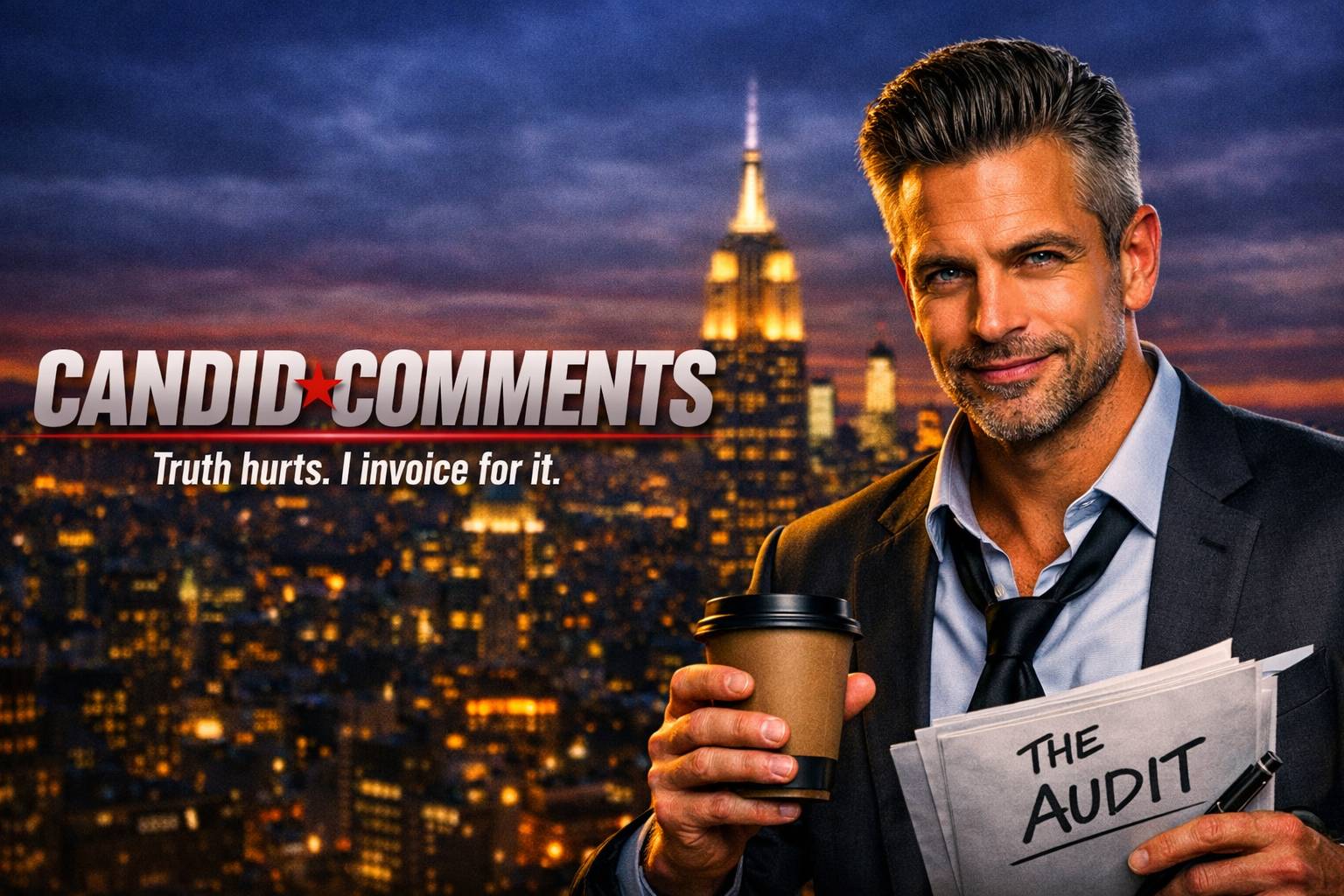
I'm Curt Candid and these have been Candid Comments.
Find me on the Twitter machine aka X @curtcandid


